Canine stroke is confusing, isolating, and often misunderstood. The Canine Stroke Initiative exists to change that — providing evidence-based information, practical resources, and real support for caregivers navigating neurological conditions in dogs.
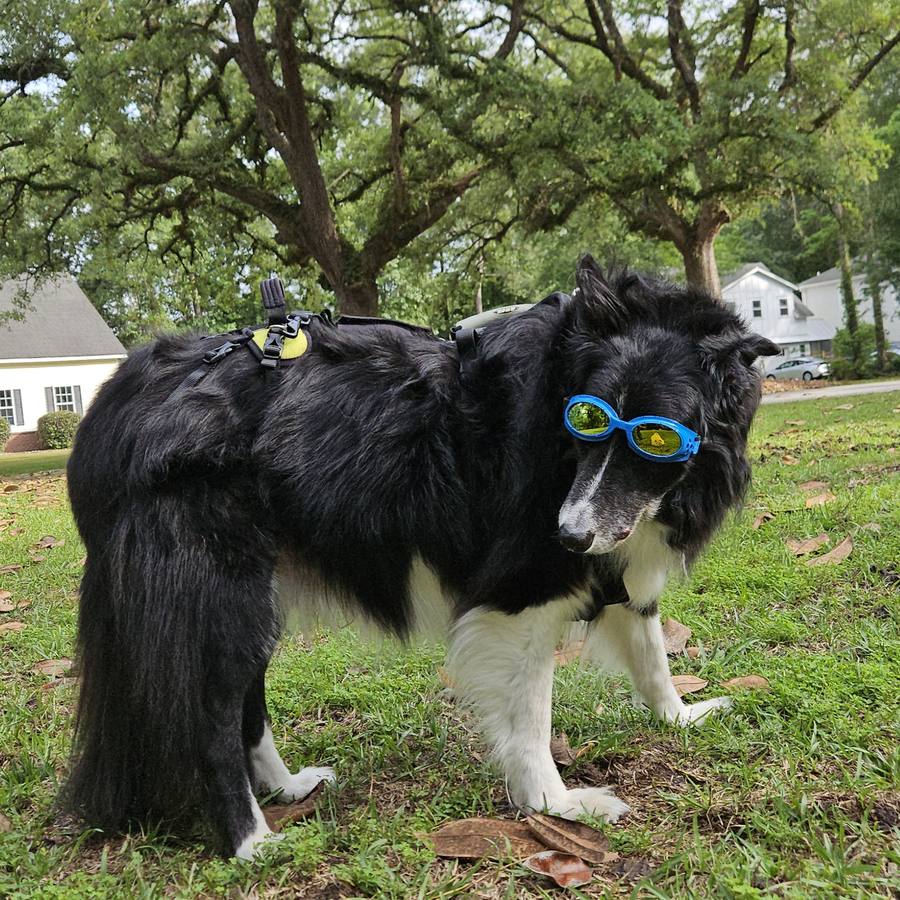
— Inspired by Finley, who meets every milestone in physical therapy with the kind of joy that makes all of this worthwhile.
Reason for hope
The evidence on canine stroke survival is more hopeful than most caregivers ever hear. Here is what the research actually shows.
Dogs without underlying comorbidities had a median survival of 907 days following MRI-confirmed ischemic stroke — nearly two and a half years after the event.
Danciu et al., J Vet Intern Med, 2025 — 125 dogs, multicenterDogs with an underlying condition — most commonly hypertension or proteinuria — had a median survival of 482 days after ischemic stroke, compared to 907 days in dogs without comorbidities. Identifying and managing those conditions matters.
Danciu et al., J Vet Intern Med, 2025 — 125 dogs, multicenterVeterinary neurology is also changing. Between 2019 and 2024, insurance claims for canine neurology conditions rose 47% — with vestibular disease among the leading diagnoses. Advanced imaging that once required a referral center is moving closer to general practice. The tools to help dogs like yours are more available than they have ever been.
What has not kept pace is the information available to caregivers and primary care veterinarians when a stroke happens. That is the gap this initiative exists to close.
Hallmarq Veterinary Imaging, March 2025 — How Telehealth Is Increasing Access to Advanced Veterinary ImagingThe problem
This is not a rare failure. It is what the data shows happens routinely — at the primary care level, across the country, every day.
In a study of more than 905,000 dogs under UK primary veterinary care, vestibular disease occurred at a rate of approximately 8 per 10,000 dogs annually — making it a common and consequential neurological presentation in general practice.
Radulescu et al., J Vet Intern Med, 2020; 34(5):1993–2004Of dogs presenting with vestibular signs at primary care practices, only 3.6% are ever referred to a veterinary neurologist. More than 96% never reach the level of care where a confirmed diagnosis is possible.
Radulescu et al., J Vet Intern Med, 2020; 34(5):1993–2004Only 4.34% of vestibular cases at the primary care level had any specific cause documented in the clinical record. The remaining 95.66% were managed and discharged without a formal diagnosis.
Radulescu et al., J Vet Intern Med, 2020; 34(5):1993–2004When imaging was performed, clinical examination alone failed to confirm peripheral localization in 22.6% of dogs initially assessed as peripheral vestibular disease. Accurate lesion localization carries significant implications for prognosis and treatment planning.
Bongartz et al., J Small Anim Pract, 2020; 61(1):57–63The word "idiopathic" means the cause is unknown — and in canine vestibular disease, it often reflects a genuinely difficult clinical picture. Vestibular signs can look nearly identical whether the cause is benign or serious, and many dogs do recover on their own. But the data suggests that the tools to look further — a senior blood panel, a blood pressure measurement, a specialist referral — are used far less often than the situation warrants.
Those tools are low-cost and accessible. Blood pressure measurement and basic bloodwork can identify the conditions most likely to cause repeat events, and early identification changes what happens next. The challenge is not a lack of care from veterinary professionals — it is a lack of accessible, organized information connecting the clinical picture to those next steps.
That is the gap the Canine Stroke Initiative exists to address: clear resources for caregivers who need to know what questions to ask, and for veterinary professionals who want organized, evidence-based support to bring to these cases.
Our purpose
When a dog has a stroke, the people caring for them are often left with more questions than answers. What happened? What comes next? What should I be asking the vet? The Canine Stroke Initiative builds resources designed to answer those questions clearly — grounded in current veterinary knowledge, free of speculation, and built for the people who need them most.
This is not only a resource for caregivers. Veterinary professionals and researchers will find a centralized, organized body of knowledge on canine cerebrovascular disease — case documentation, peer-reviewed research, and specialist connections that are currently scattered or difficult to access. The Initiative exists to raise the standard of information available to everyone in this space.
We do not diagnose, treat, or replace veterinary care. Our role is to support, guide, and help caregivers ask better questions alongside qualified professionals.
What we are building
A curated, searchable library of peer-reviewed veterinary research on canine stroke and cerebrovascular disease — organized for both professionals and informed caregivers.
Documented real-world cases illustrating how canine cerebrovascular events present, progress, and respond to care — bridging clinical knowledge and lived experience.
A searchable database of veterinary neurologists, internists, and rehabilitation specialists to help families find qualified professionals when they need them most.
Pet owners and veterinary professionals will be able to submit case reports directly, contributing to a growing body of real-world documentation that benefits the entire field.
Plain-language resources on stroke symptoms, vestibular disease, recovery timelines, and how to advocate effectively alongside your veterinary team.
STAY CONNECTED
Whether you're a veterinary professional, a caregiver who has been through this, or someone who wants to help build something that matters — we want to hear from you.
info@caninestroke.org